
The compute and networking rebuild is the visible part of a modernization project. But infrastructure serves data, and how data moves through a system matters as much as where it runs. In this final installment of our three-part series, we cover the real-time data architecture we designed alongside the infrastructure rebuild and the repeatable methodology that ties all of it together.
If you’re just joining: Part 1 covered the infrastructure audit, and Part 2 covered the rebuild and the decisions our team made to shape the AI-generated output.
Real-Time Data Replication: Replacing Batch Exports
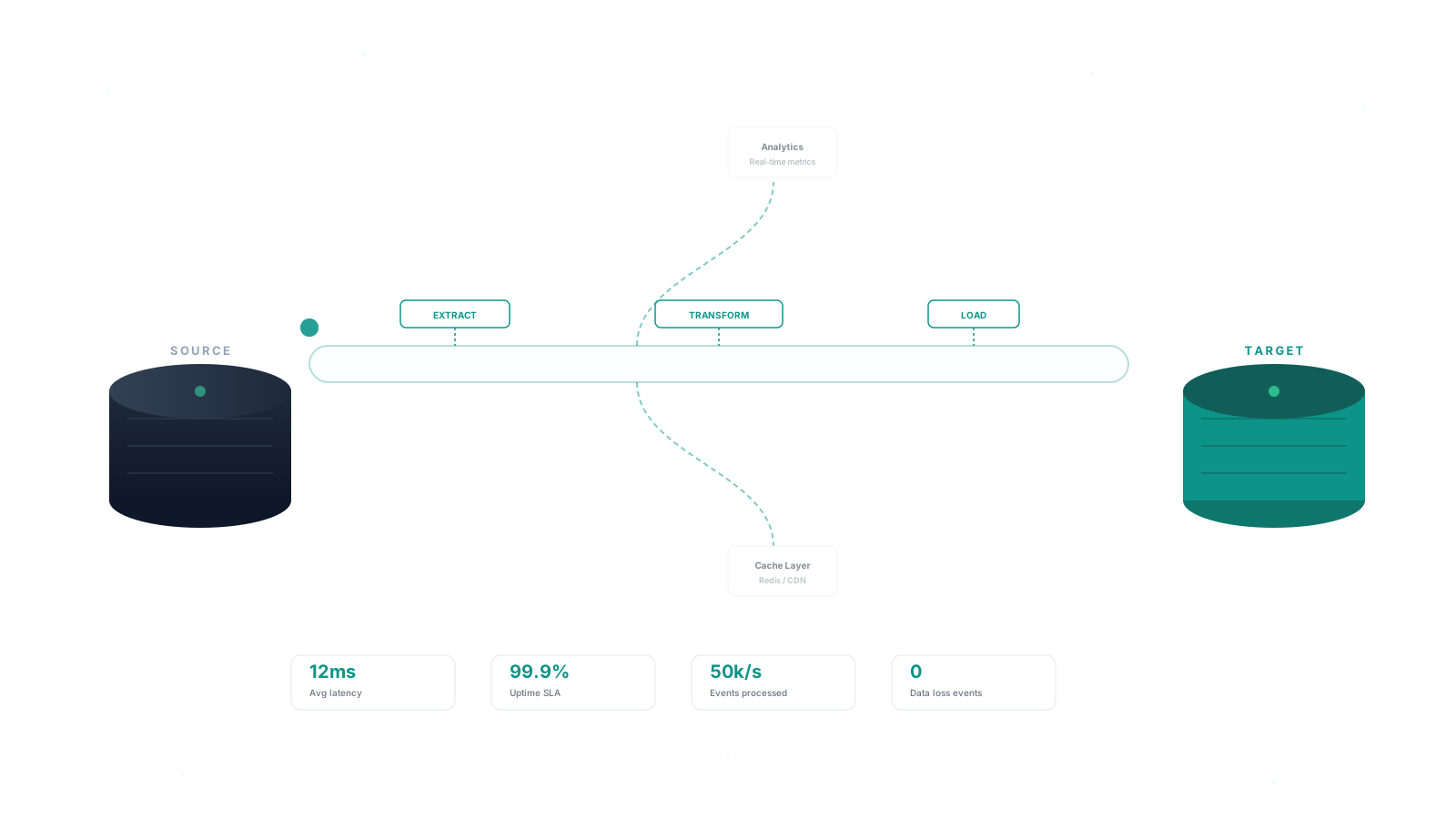
Alongside the infrastructure rebuild, we designed a continuous data replication pipeline for an analysis system that previously relied on nightly batch exports. The old process introduced up to 24 hours of data lag, required manual intervention when jobs failed, and put load on the production database at predictable intervals.
The replacement is built on database replication rather than scheduled exports. The production database streams changes continuously to a read-only replica on the analysis system. The replica stays current within seconds. The analysis system queries it locally at full speed, with zero load on production.
A few properties of this design that matter in practice:
- Sub-second freshness. Changes on the primary appear on the replica in seconds, not hours. Analysis runs on current data rather than yesterday’s snapshot.
- No production impact. Replication is a lightweight background stream. The analysis system’s query load is completely isolated from the production database.
- Offline resilience. If the connection between primary and replica drops, the replica keeps serving from its local copy. When the connection restores, it catches up automatically from where it left off.
- No new infrastructure required. The replication transport runs over an encrypted tunnel using a provider already in use for web traffic. Zero additional cost, no ports to open, and it works behind NAT on the receiving end.
The decision to use tunnel-based transport came from evaluating what was already in the stack. The path of least friction was also the most secure option, which is a pattern worth looking for whenever you’re designing integrations between systems.
The Full Methodology
What we’ve refined through projects like this is a six-step process for legacy-to-modern infrastructure conversion. It’s designed to move fast without sacrificing safety and to keep the live environment running throughout.
- AI-driven audit. An agent analyzes the existing environment and produces a structured picture of the current state: security group scope, network topology, resource organization, IP strategy, and tagging gaps.
- Stakeholder-guided architecture. Our team makes the decisions that defaults can’t make: budget trade-offs, workload-specific constraints, operational preferences, risk tolerance. The AI proposes; we decide.
- Infrastructure-as-code generation. The AI agent produces the full IaC definition, modularized, tagged, and version-controlled. Compartments, networking, compute, storage, security groups: the entire target environment in code.
- Blue/green provisioning. The new environment is built alongside the old. Nothing changes in production. The legacy system continues operating exactly as before while the replacement is built and validated.
- Per-service DNS cutover. Services migrate one at a time via DNS changes. Rollback at any point is a record update, not an infrastructure rebuild. The legacy environment stays live and intact until validation is complete.
- Decommission after validation. Only after every service is confirmed stable on the new infrastructure does the legacy environment come down. Not before.
The AI accelerates steps 1, 3, and 4, turning work that typically takes days or weeks into hours. Steps 2, 5, and 6 are where our team’s judgment, operational experience, and business context are irreplaceable.
What This Looks Like for Your Environment
If your cloud infrastructure grew before infrastructure-as-code was standard practice, or has expanded through console-click provisioning rather than version-controlled definitions, the path from where you are to where modern security practices expect you to be is more navigable than it might appear. It doesn’t require downtime. It doesn’t require starting from scratch. It doesn’t require replacing what works.
It requires a clear audit of the current state, a team that can make the architectural decisions that defaults don’t account for, and a migration strategy that treats the live environment as non-negotiable until the new one is proven.
That’s the model we’ve built: AI agents that accelerate the technical work, paired with the operational expertise to make the calls that matter. If your organization is navigating a legacy infrastructure modernization and you’d like to talk through the approach, we’re available.