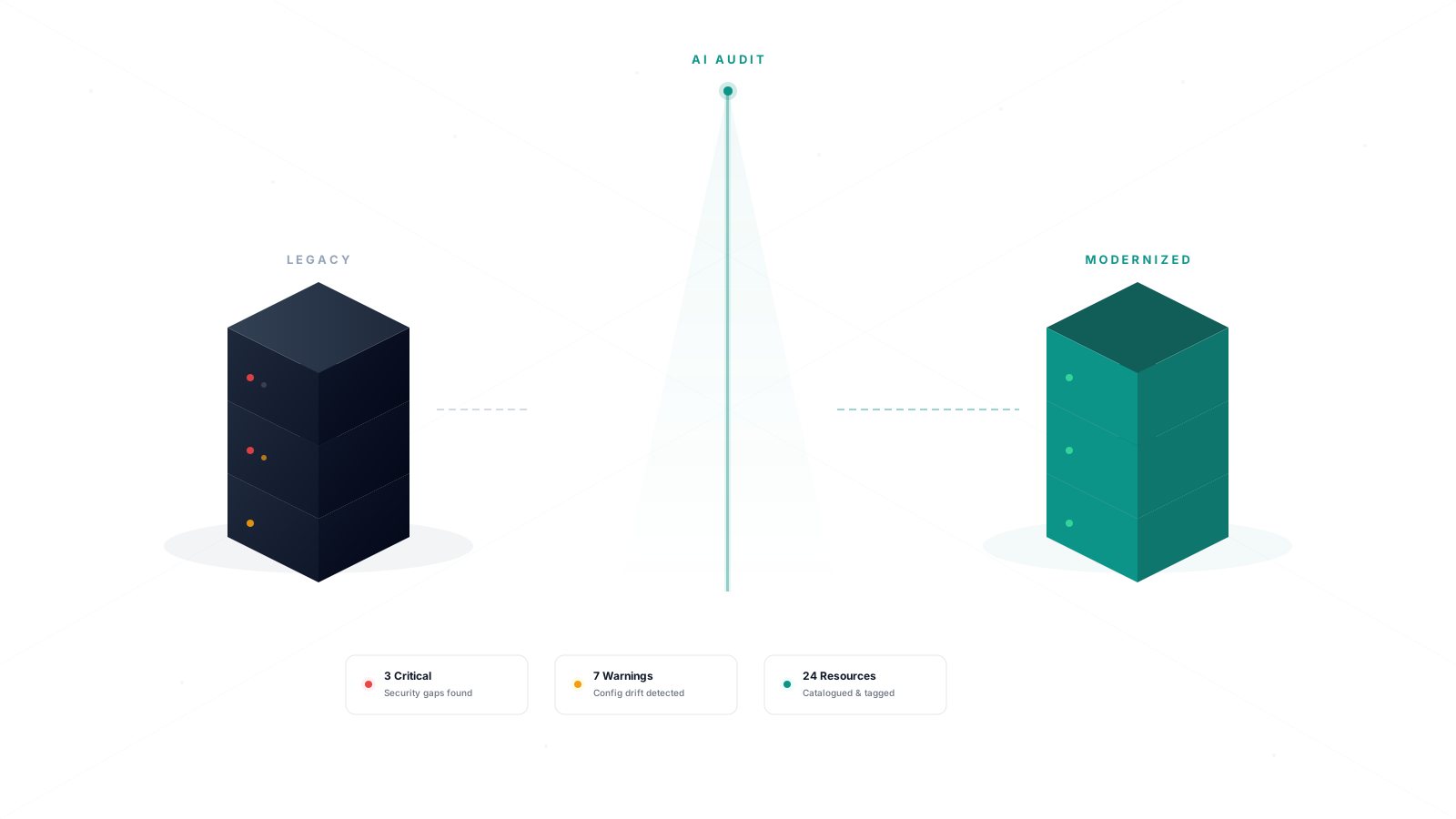

Most cloud environments weren’t designed. They grew. A server gets provisioned to solve an immediate problem. A service gets added, then another. Over time, what started as a pragmatic setup becomes load-bearing infrastructure that nobody wants to touch. Not because it’s broken, but because it works, and the cost of changing it feels uncertain.
We recently completed a full infrastructure audit and rebuild for a multi-service cloud environment that had expanded organically over several years. The goal wasn’t to replace what was working. It was to build a secure, properly segmented replacement alongside the live environment and migrate services one at a time, without any downtime. This is the first in a three-part series on what that process looked like and what we learned along the way.
The Value of an Outside Perspective
The first step was having an AI agent analyze the existing infrastructure configuration: not the live environment directly, but the implicit architecture embedded in security rules, network topology, and resource organization. Patterns that become invisible when you’re operating inside a system every day become obvious when you look at them fresh.
Within minutes, the agent surfaced several common characteristics of organically grown cloud environments:
- Flat network topology. Services were running in a shared subnet without clear segmentation between web, application, and data tiers. A natural starting point that hadn’t been revisited as the environment matured.
- Broadly scoped security rules. Ingress rules written for convenience had grown wider than the current architecture required. Nothing alarming, but worth tightening as workloads became better defined.
- Unified resource management. Compute, storage, and networking lived in the same administrative space. Fine at small scale, harder to manage access control and cost attribution as the environment grows.
- Ephemeral IP addresses. Public-facing services used default IP assignment, which can change on reboot. A detail that creates quiet DNS fragility over time.
- No tagging strategy. Resources without consistent labels make cost attribution and environment tracking harder than they need to be.
None of these are failures. They’re the normal fingerprints of infrastructure built to ship, then never given a quiet moment to be revisited. The value of the audit isn’t to assign blame. It’s to establish a clear picture of the current state before designing the target.
Why AI Accelerates This Phase
A manual infrastructure audit requires someone to read through console configurations, cross-reference security rules against actual traffic patterns, and build a mental model of how everything connects. It takes time, and it’s easy to miss things when you’re familiar with the environment.
An AI agent does the same work in minutes, produces a structured output, and doesn’t carry the assumptions that come from months or years inside the same system. That combination of speed and fresh perspective is what makes AI-assisted auditing valuable, even for teams that know their infrastructure well.
The audit output becomes the foundation for everything that follows: the target architecture, the security group redesign, the network segmentation plan. Getting it right at this stage means the rebuild phase starts from an accurate map rather than a set of assumptions.
In Part 2, we cover how the AI agent generated a complete infrastructure-as-code definition for the new environment, and the key moments where our team’s guidance shaped the outcome.